

Dry Eye Treatment
Advanced Dry Eye Care for Lasting Comfort
Dry Eye is one of the most common reasons patients come to see us, and it is also one of the most overlooked. Many people assume that occasional irritation, burning, or watering is just a normal part of aging, screen use, or contact lens wear. In reality, these symptoms often point to an underlying condition that can be diagnosed and managed.
At Innovative Ophthalmology, our team takes Dry Eye seriously because, left untreated, it can affect your comfort, your vision, and the long-term health of the surface of your eyes.
What is Dry Eye?
Dry eye occurs when your eyes do not have enough quality tears to stay properly lubricated. This may be because your eyes do not produce enough tears, or the tears you do produce evaporate too quickly or lack the right balance of ingredients. In both cases, the surface of the eye does not get the consistent moisture and protection it needs.
Tears form a protective coating that keeps the front of the eye smooth, clear, and comfortable. When that coating breaks down, the eye’s surface becomes irritated and inflamed. This is why dry eye is considered a chronic condition rather than a one-time problem. However, with the right evaluation and treatment, most patients experience meaningful, lasting relief.

What Causes Dry Eye?
Dry eye has many possible causes, and for most people, it is a combination of several factors rather than a single one.
Age
Age is a significant contributor, as tear production naturally declines over time, and Dry Eye becomes more common after age 50.
Hormonal Changes
Hormonal changes, particularly in women during and after menopause, also play a role.
Daily Habits and Environment
Daily habits and environment matter a great deal, as long hours in front of computers, tablets, and phones, which reduce how often we blink, meaning the eyes are not refreshed with tears as frequently as they should be, and dry climates, wind, air conditioning, heating, and ceiling fans all speed up how quickly tears evaporate.
Contact Lens Wear
Contact lens wear can contribute too, especially when lenses are worn for long stretches.
Certain Medical Conditions and Medications
Certain medical conditions and medications are linked to dry eye, including autoimmune conditions like rheumatoid arthritis and lupus, as well as antihistamines, decongestants, and certain blood pressure medications.
One of the most frequent underlying causes we see is meibomian gland dysfunction, a problem with the tiny oil glands along the edges of the eyelids. When these glands become blocked or stop working properly, the tears lose the oily layer that keeps them from evaporating.
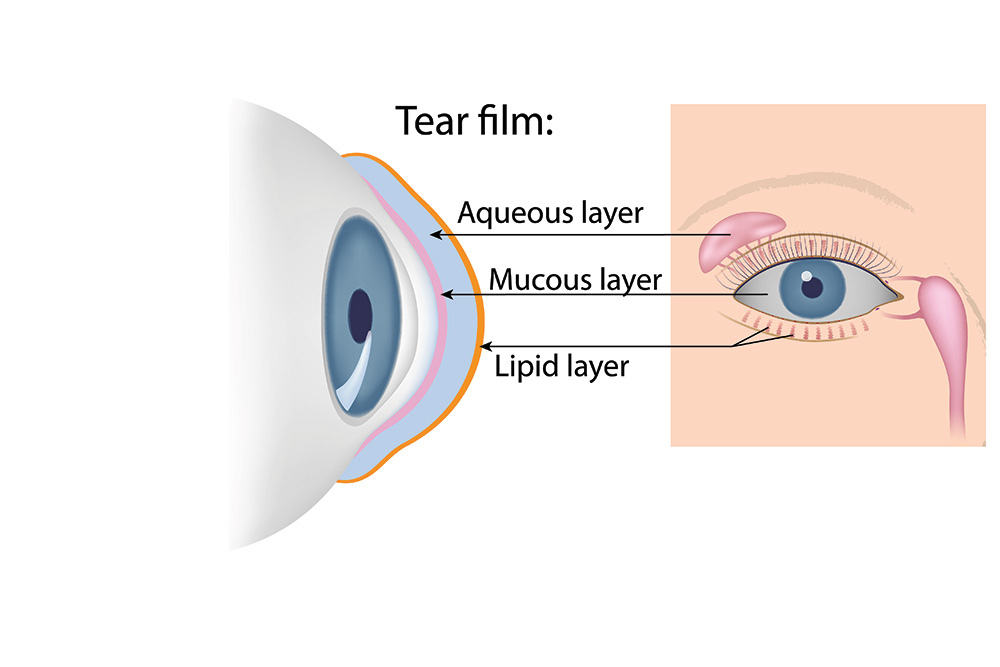
What is the Tear Film?
The tear film is the thin, protective layer of fluid that coats the front of your eye with every blink. Though it feels like simple moisture, it is a balanced structure made up of three distinct layers, each with its own job:
- Lipid (oil) layer: The outermost layer, produced by the meibomian glands in the eyelids. It seals in moisture and slows evaporation. When it’s weak or missing, tears evaporate too quickly, the most common form of Dry Eye.
- Aqueous (water) layer: The thickest layer, produced mainly by the lacrimal glands. It hydrates the eye, washes away debris, and delivers oxygen and nutrients. A shortage leads to the classic feeling of dryness and grittiness.
- Mucin (mucus) layer: The innermost layer, produced by cells on the eye’s surface. It helps tears spread evenly and stick to the eye. Without it, the tear film breaks into dry patches even when enough fluid is present.
Because each layer depends on the others, a problem in any one can throw off the entire tear film, which is why pinpointing where the breakdown is happening is so important to effective treatment.
Symptoms of Dry Eye
Dry Eye does not always feel “dry,” which is one reason it is so commonly missed. Symptoms vary from person to person, and they often come and go depending on activity and environment.
Common signs include:
- A stinging, burning, or scratchy sensation
- A feeling of grittiness, or like there is something in the eye
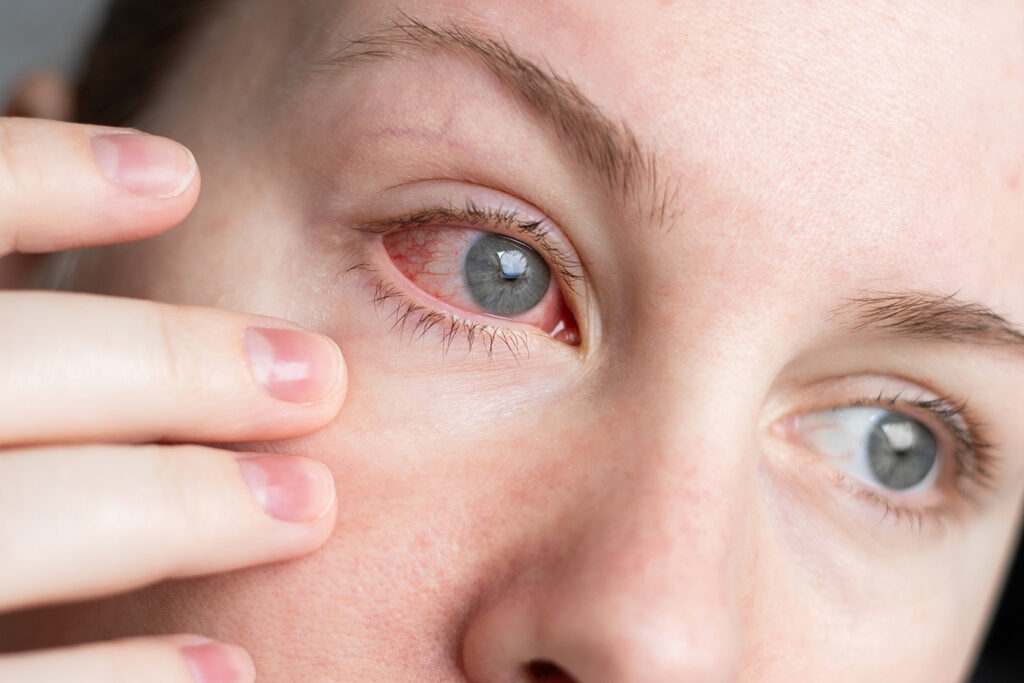
- Redness
- Sensitivity to light
- Excessive watering, as irritated eyes produce a flood of reflex tears (which is why many patients are surprised to be diagnosed with Dry Eye when their eyes seem to water constantly)
- Blurry vision that clears briefly when you blink
- Eye fatigue during reading or screen use
- Difficulty wearing contact lenses
- Stringy mucus in or around the eyes
If these symptoms sound familiar, it is worth having your eyes evaluated rather than continuing to manage on your own.
How is Dry Eye Treated?
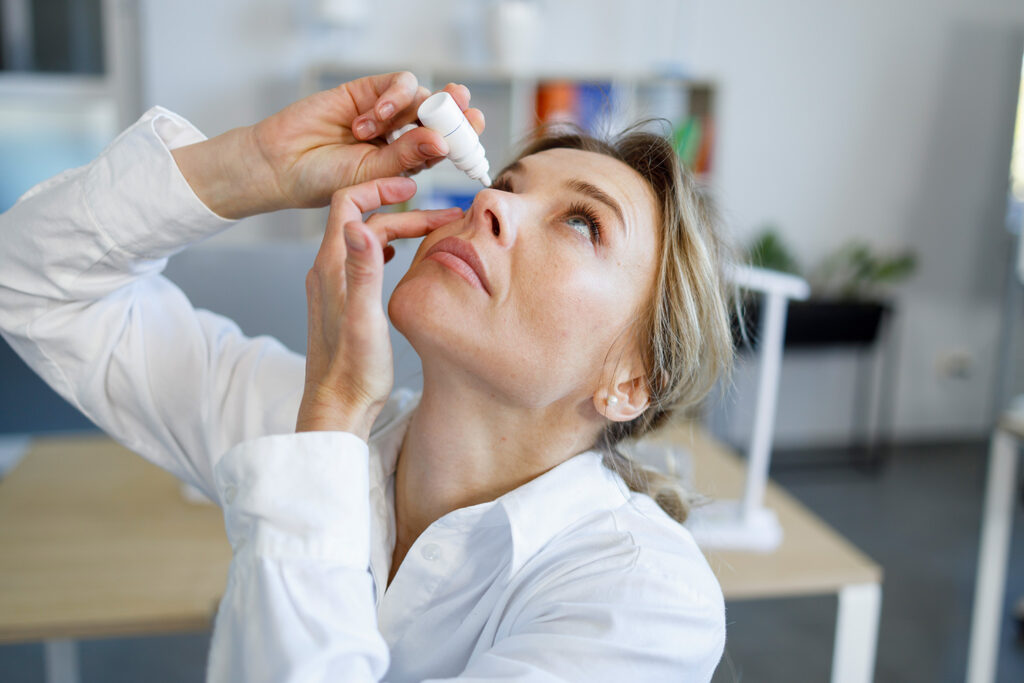
Effective treatment begins with an accurate diagnosis. At Innovative Ophthalmology, we start with a comprehensive eye exam to evaluate the health of the surface of your eye, the function of your eyelid glands, and the quality of your tear film. This step is essential because dry eye looks different in every patient, and identifying the underlying cause allows us to tailor treatment to your specific needs rather than relying on guesswork. For many patients, treatment begins with therapeutic eye drops. Artificial tears and lubricating drops supplement your natural tears and provide soothing, on-demand relief, while prescription drops can target the inflammation that drives chronic dry eye and help your eyes produce healthier tears over time. Drops are often the foundation of a long-term plan and are frequently combined with other therapies for the best results.
Intense Pulsed Light (IPL)
One of the most effective in-office treatments we offer is Intense Pulsed Light (IPL) therapy. IPL uses gentle, controlled pulses of light applied to the skin around the eyes to address one of the root causes of dry eye. The treatment helps reduce inflammation and stimulates the meibomian glands so they can release oil more freely, restoring the protective lipid layer of the tear film. Because it treats the underlying gland dysfunction rather than just masking symptoms, many patients find that IPL provides longer-lasting relief than drops alone. Treatment is typically delivered as a short series of sessions, and most patients describe it as comfortable. If you have been living with eye discomfort, irritation, or fluctuating vision, relief is possible. Schedule an appointment at Innovative Ophthalmology in Paducah, KY, so we can determine what is causing your symptoms and design a treatment plan that fits your needs and lifestyle.